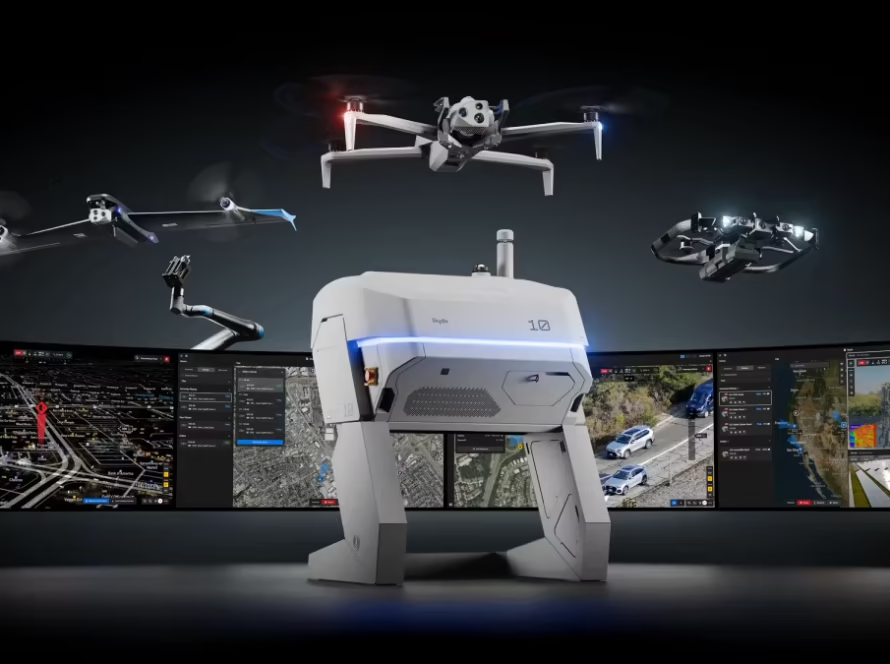


Small flying things, once dismissed as toys with propellers, are now important enough for ministers to watch them being shot down in the desert. The UK’s new Skyhammer missile, built by Cambridge Aerospace, has been successfully tested in Jordan.
Skyhammer is designed to tackle Shahed-style attack drones, the one-way flying lawnmowers made infamous in Ukraine and the Middle East. It reportedly has a range of 30 kilometres and can reach 700 kilometres per hour. That does not seem super fast, but it is brisk by any civilised measure. The first missiles and launchers are due to reach the UK Armed Forces in May, with more expected during the first six months of the deal.
Cambridge Aerospace is a UK veteran-led start-up, which is worth noting. This is not a vast defence leviathan. It is a smaller British outfit doing what smaller British outfits often do best: noticing a problem, going into the shed, and coming out with something impressive.
For UK drone enthusiasts, this story isn’t about panic. Nobody is launching Skyhammer at our DJI’s and FPV’s because we filmed a sunset over Norfolk. The point is more subtle. The same broad family of technology that lets us film landmarks, coastlines and skylines is also being used in war zones to strike fuel depots and airfields. The sky has become crowded with possibilities, and not all of them are charming.
Skyhammer shows is that the line between “drone” and “aircraft” is getting harder for institutions to ignore. A quadcopter taking roof survey photos, a racing FPV drone, a police drone and a hostile one-way attack system are clearly different things. But to the public, and sometimes to policymakers, they can blur into one big buzzing category of “things in the sky”.

That is where good drone culture has to be sharper than ever. British drone enthusiasts can benefit from being professional in the old-fashioned sense: courteous, competent, prepared, and aware that one foolish flight near an airfield can damage the reputation of thousands of decent pilots.
Skyhammer also suggests Britain is taking drones seriously across the board. Defence is learning quickly, industry is moving faster, and the MoD is buying from smaller companies. The old committee-room fog may, on this occasion, have lifted enough for someone to see the target.
For those of us filming landscapes, cities and events, the message is that the drone world is still developing. The days when a drone was just a gadget from the middle aisle of technological temptation are gone. We now fly in an ecosystem that includes airports, emergency services, defence, privacy concerns and nervous members of the public.
So, next time you fly, do the boring things beautifully: check, plan, ask, log, communicate. The future of drones in Britain will be shaped by ordinary pilots making good decisions over a field, a town square, or a tempting church spire.
*The relationship between drone pilots and local airspace authorities tends to work best when it’s understood. Most experienced operators already keep a quiet routine: a look at the map, an awareness of restrictions, and permission where it’s needed.